
The main feasts of Christmastide – Nativity, Epiphany, Baptism of Jesus – as well as Candlemas, celebrate the same theme: God’s ongoing self-revelation. As the wisemen follow the star, we strive to discover the meaning of life and build connections with God and people, and receive guidance towards achieving this in most ordinary circumstances. The Epiphany feast itself has passed, but the readings until Lent will continue to give us biblical examples of such lower-case “e” epiphanies. We begin with the story in which an Israelite prophet-to-be, Samuel hears God for the first time; paired with Nathanael and Philip’s early interactions with Jesus.
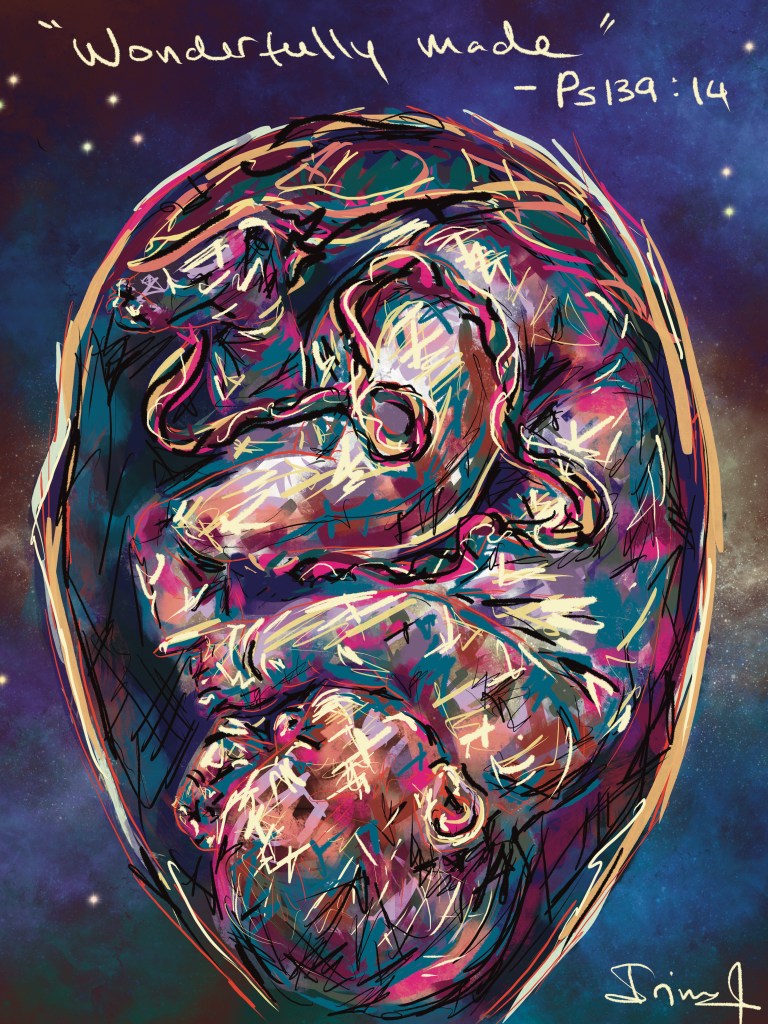
As for Samuel’s story, it is indeed about the boy hearing God’s voice; yet, it begins with God hearing a person – Samuel’s mother. Hannah was married to a priest and begged God to grant her a child. She reminds me of Elizabeth from our Advent reading; a woman born of and married into the priestly line who conceived John the Baptist in her later years. Both boys became special messengers to their people, and the scriptures make the connection between their vocation and circumstances of conception. This is the aspect of Samuel’s story underscored by today’s Ps 139, which asserts that God has knowledge and goals for us from the time before we are born.
However, God’s plans unfold based on our responses. In Samuel’s case, the events are set into motion by Hannah’s gratitude for his birth based on which she dedicates him to a life of serving God in a shrine. Actually, I find it heartbreaking, particularly the detail in 1 Sam. that Hannah sews and sends to the shrine a series of incrementally larger tunics to clothe her boy year by year. But, as the Bible illustrates consistently, self-knowledge and purpose that lead to ultimate fulfillment arise from self-giving. Hannah’s devotion is juxtaposed with the lack of that in Eli the priest, in whose charge Samuel spent his early years, and whose sight is said to have dimmed, highlighting the loss of clarity that he also suffered not only physically but also in leadership. (He refused to notice and address the behavior of his sons who mocked worship.) But, at least Eli could still “hear” – he figured out, after three times, that the voice that kept calling Samuel’s name one night belonged to God, and instructed the boy on how to respond. This reminds me that: a) regardless of how shortsighted we become, we retain the capacity to exercise the right judgment from time to time, and b) even though we may criticize others for their mistakes, it is still possible to glean some wisdom from any relationship. The key is discernment, and response.
What Samuel eventually heard that night was an epiphany about the state of the relationship between God and his people, and where Eli’s house was headed. Disregarding this warning, because of negligence, or blindness, or both, Eli allowed the light representing God’s presence in the shrine to go off – like his own vision – which symbolized the withdrawal of God’s support of his dynasty. Samuel, on the other hand, got to serve as the last Judge in Israel’s transitional form of government between its early tribal society and unified monarchy. He also had enough foresight to know that it wasn’t in his vocation to become Israel’s first king, anointed Saul and later David instead, and is said to have remained a prophet for over 100 years.
Much like God saw this future in a child and Jesus “saw” Nathanael, God sees the capacity for faith and purpose in you and me. This sense of being seen, truly known, may be comforting (as in Ps 139) or disconcerting; but, that’s what ultimately drew the first followers to Jesus. What would it take for us to really “see” another person, not only for their gifts and mistakes, social status and cultural background, but also as a person made in the image of God in his or her own right? What would it take for us to truly see ourselves? Over a life-long series of calls and responses, we receive such opportunities to see ourselves through God’s eyes, and God – through our own. What to do with these lower-case “e” epiphanies is up to us. Amen.
Reflection Questions
- Today’s scriptures use two different senses as metaphors for human ways of connecting with God: hearing/listening, and seeing. All three texts also attribute sensory/cognitive processing to God. Can you recall scriptural passages in which other senses – touch, taste, and even smell – are used to illustrate similar ideas? In our church services and daily spirituality, on which of the five senses do you rely the most to worship, pray, and receive spiritual insights?
- What do you think of the well-known quote, “The eye through which I see God is the same eye through which God sees me; my eye and God’s eye are one eye, one seeing, one knowing, one love” (Eckhart von Hochheim, c. 1260 – c. 1328, a German theologian in the Holy Roman Empire, who belonged to the Dominican Order). How might it inform or shape our daily spiritual practices?
- Jesus said to Nathaniel, “I saw you”; and promised that in turn, Nathaniel would also see a mystical vision in which the heavens and earth became connected via a ladder. How/where do you tend to experience such a connection/union with the divine presence that results in spiritual clarity, renewed sense of vocation, direction in times of confusion, ability to perceive life’s difficulties differently?
 Irina's Art
Leave a Reply