
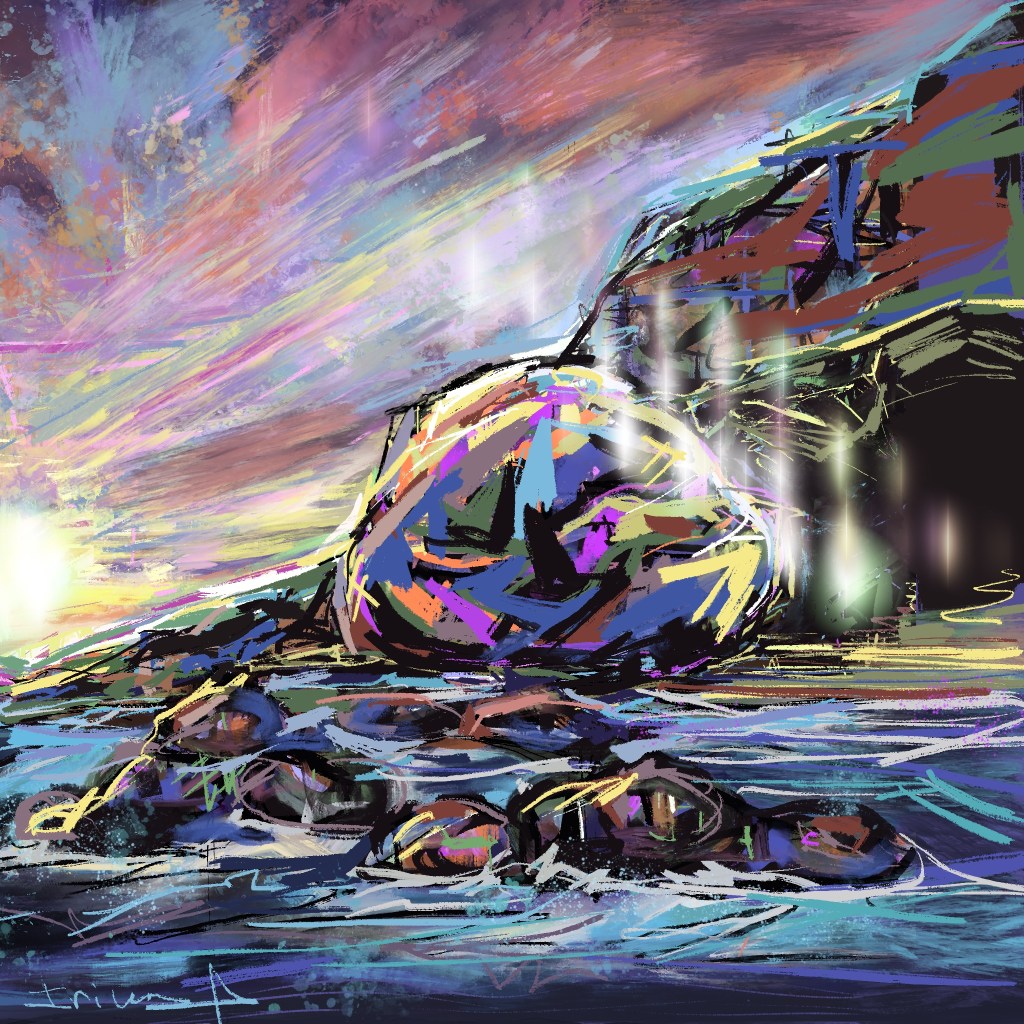
Thank you for joining us at St Tim’s on this special day. Is there a facet of worship that particularly held your attention or moved you today: the music, words, or familiar faces; touching and tasting communion; memories or associations coming to mind; or volunteering and contributing? What does this say about how you connect with God and people? Our temperaments may play a role in how we seek spiritual experiences – how we explore the mystery of the open tomb and rise to new life. So what stood out to me from the Easter gospel, this year, is its portrayal of three spirituality types in its characters, each of whom participated in Easter in distinct ways. These may echoe our own differences, and help us understand what we bring to and get out of church. Recall that it was only by hearing her own name spoken that Mary recognized Jesus. As we try to connect with God and others, might we first benefit from exploring who we are?
If so, how does Mary Magdalene, John, and Peter reflect the human spectrum of emotions, patterns of decision making, and faith development? Mary’s portrayal bookends the story. First, she was prudent; for it would not be wise not to go into a potentially robbed grave alone. Afterwards, she looked, perhaps, indecisive or enthralled by grief – or, was she hopeful that there was more to discover? Most prominently though, she involved others and was driven by loyalty to Jesus. We would resonate with Mary if we also prioritize collaboration and emotional connection. Is this how women differ from men, or does Mary embody the relational type of spirituality that finds solace in intimacy with the sacred; perhaps, similar to St Teresa Avila?
When Mary returned with the men, John arrived first, but hesitated to enter. Was it out of respect for Peter’s authority, or based on his own personality, contemplative in nature? Maybe, he stands for those who weigh choices carefully and analyze potential outcomes; like a person who is emotionally driven when deciding that he “needs” a certain product, but then does endless consumer research to find the right brand! Spiritually, we are most like John if we approach God and life through study and meditation. Maybe, as Carl Jung did, the Swiss psychoanalyst, whose quest for exploring the mysteries of the soul stemmed from deep self-reflection. Today’s readers may prize fast pace and being busy, and might dismiss John’s indecisiveness; but, his willingness to pause and think is still a useful skill.
If Mary was driven by an emotional connection with others, and John – by an intellectual quest, Peter shows how emotions shape behaviors, and exemplifies active, experiential spirituality. He was slow to get to the tomb, maybe, in part because he took the time to rein in his feelings. Like those of us who wake up with lots of plans, even good ones, but still need to force yourself out of bed? To use a chemistry term, the “activation energy” you need is high. But once you see the open tomb, you confront the situation with curiosity and low risk-aversion. As children, such people may seem rude, explosive, lacking attention, or weak in executive function; but they are sensitive, perceptive, and spirited people who grow up to worship through service. This is how I imagine Martin Luther King, or Mandela.
Have you recognized your own spirituality type as relational, contemplative, or emotive? Or perhaps, each of these is only a facet of your balanced personality? What may Easter mean to you then? If, like Mary, we search for meaningful connections, we may discern the signs of “new life” as reconciliation and healing. If we identify with her vulnerability, the stone rolled away may represent the removal of barriers to intimacy, and resurrection itself – the movement from despair to hope found in belonging. If we are like John, we might conceptualize “new life” as transformation and renewal. The rolled-away stone would signify the removal of barriers to understanding – a paradigm shift. A gaping cave would send the invitation to explore deeper realities, whereas resurrection – to the movement from ignorance to wisdom, doubt to clarity. And still, those of us with Peter’s impulsive and passionate nature, might embrace “new life” as a sense of spiritual freedom or awakening; and the rolled-away stone – as spiritual activation, and the mastery over emotions that hinder spiritual growth.
Upon reading this passage, it may seem that Mary’s spirituality was the only kind to which the risen Christ manifested himself. Indeed, it may be so that the relational aspect of communion with God and others underpins most spiritual experiences. But, note that the story doesn’t end here, and that the other characters had their own paths to meet the resurrected Lord. As such, everyone may partake of the new life epitomized in the resurrection, albeit in distinctive ways. And the hope of our faith is that Jesus’ death removes all that is distorted and dysfunctional in our souls and minds, and that his eternal life enables our own transformation to transcend time and space. May we continue to keep ourselves open to hearing our names called – to discerning God-given insights into who we are now, and who we are meant to be. May we seek and give love from the place of authenticity – neither ashamed of who we are, nor complacent in thinking that no further change is necessary.
Thanks be to God. Alleluia – Christ is risen!
Reflection questions:
1. With which character do you identify most closely when it comes to making important decisions: John (fast to get there, but indecisive at the last moment), or Peter (slow to reach the decision, but then fully committed)? A bit of both, perhaps, depending on the situation?
2. Mary’s character seems to have more dimensions. How would you describe her: prudent, respectful, loyal, vulnerable, collaborative, curious… Something else? When have you found yourself to be most like her, and in what aspect of her personality?
3. Can you think of a situation in your life when you could have said, “I have seen God”?
 Irina's Art
Leave a Reply