
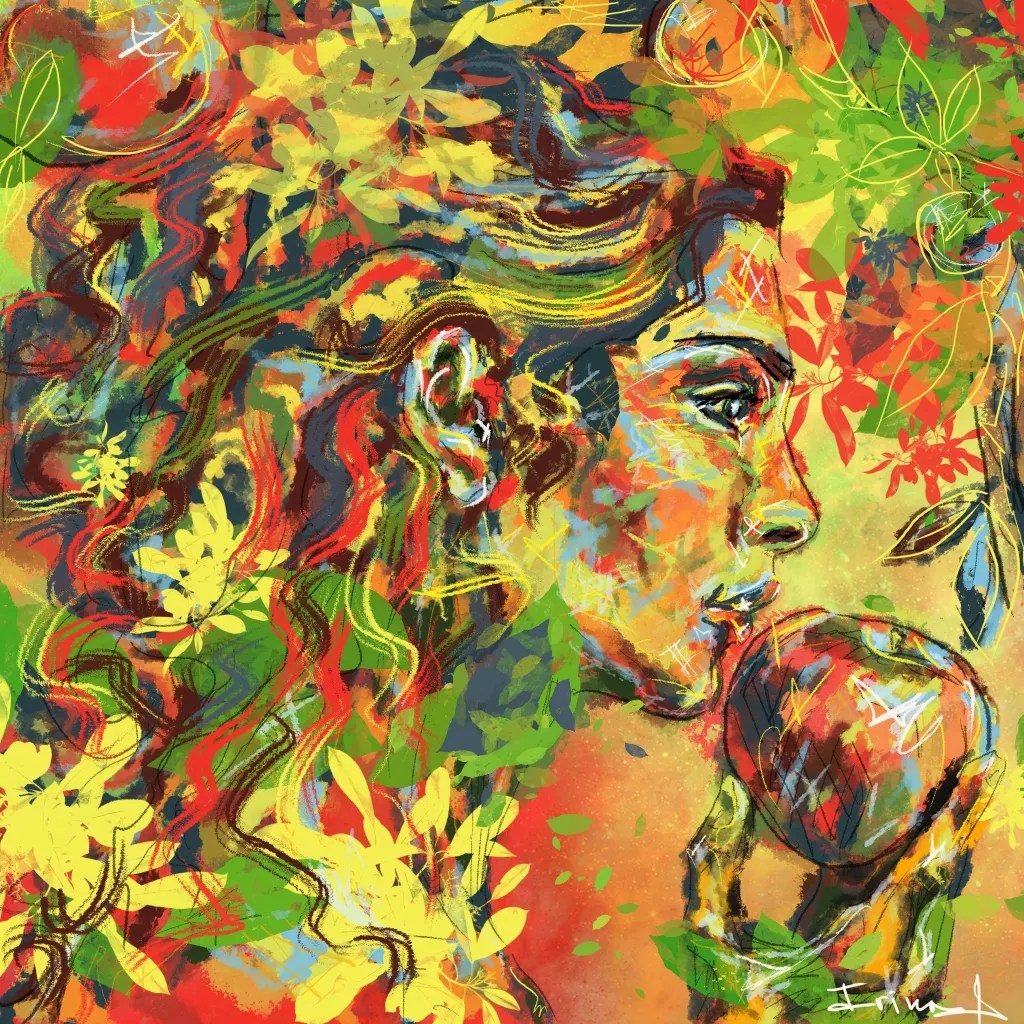
Each year, Lent begins with the gospel story recounting Jesus’ wilderness experience, as told in one of the Synoptic Gospels (once again, John stands apart, skipping this episode and moving directly from the baptism to the calling of the disciples and the first miracle at Cana). The readings over the rest of the season, however, follow various patterns based on a three-year cycle. Notwithstanding annual variation, all Lenten readings aim to position Jesus’ story within that of humanity itself and to tell it through echoes between the Gospels and the Old Testament. Lent, in other words, traces one continuous human and divine story, not beginning with the cross, but with the human condition that makes the cross necessary.
So this year, as Jesus faces temptation in the wilderness as described in Matthew (Advent 2025–November 2026 is the year of reading through the Gospel of Matthew), Genesis takes us back to Eden where the first humans faced their own temptation. Over the next six weeks, these pairings will continue to unfold as follows: Abraham’s call into a new relationship with God for him and his people beside Jesus’ conversation with Nicodemus about new birth; water from the rock in the desert alongside the Samaritan woman’s living water; David’s anointing, with the assertion that God sees the inside of a person while we see only the outside, alongside the giving of sight to a man born blind; dry bones restored and covered again in flesh as Lazarus is called from the tomb; and finally the suffering servant in Isaiah as the prototype for Christ’s Passion.
Today, we begin with Jesus’ time in the wilderness, which he entered not as a distant divine figure, but as one who fully embodied humanity. Adam and Eve faced the same deception in the garden that Jesus faced in the desert: not simply the temptation to disobedience, but the illusion that destiny can be seized and secured by our own grasp. Their failure to see through it, unlike Jesus who succeeded in doing so, is described in theology as the fall. But unlike Western theologians who, following Augustine, teach that all humans inherit original sin, Orthodox theology speaks instead of ancestral sin. I prefer this term as well, because I do not believe that any human beings are destined for “hell” from birth. What we all share is an inclination toward selfishness; but what we are responsible for is only our own wrongdoing (Ezekiel 18:20).
In other words, we always retain the capacity for goodness with which we are created, as symbolized by the first humans’ life in the Garden. However, the innocence of Adam and Eve is like that of very young children; it is not yet wisdom, but simply infancy. An infant cannot choose right from wrong until she knows the difference — until she, in biblical language, “eats of the fruit of the tree of knowledge.” The movement out of Eden thus represents the beginning of self-awareness, both for humanity as a whole along our evolutionary path, and for each individual over the course of a lifetime. To evolve, or to grow up means to learn to do what is right freely, which will inevitably involve missteps and mistakes, rebelling and grasping, learning and consequences. Self-giving love, so perfectly embodied in Jesus yet also alive in each of us in some measure, is what helps us choose good over evil, one decision at a time.
As such, the temptations that Jesus faces are not some extraordinary tests devised uniquely to prove his perfection. They are precisely the temptations that accompany any form of growth and responsibility. This year, I find it especially meaningful that we hold our annual general meeting (aka Vestry meeting) precisely on this Sunday. This allows us to interpret Jesus’ temptations specifically as those that accompany leadership. Seen in this light, to turn stones into bread is to meet immediate needs and solve problems quickly in ways that undermine the long view, patient formation, and deeper purpose. To jump from the pinnacle of the temple is to impress through performance, empty words and gestures, and to ascribe success purely to numbers and demonstrable outcomes. The offer of dominion over all kingdoms is the most subtle deception of all. The condition the Deceiver sets before Jesus — “worship me” — is essentially about accepting the illusion that outcomes, people, and fate are ours to control. In the Church, this can appear as the illusion that the life and history of a parish unfold through human vision and management alone, rather than in collaboration with God’s help and direction.
These temptations accompany every level of parish life, from clergy to wardens and other lay leaders, and even the community as a whole. Yet over time, individuals and communities alike learn to remain on the path of integrity through experience, error, repentance, and grace, and grow more fully into Christ’s likeness. And as I read through the Vestry report that reviews our parish life over the course of the past year, I already see this taking shape among us.
What stood out to me from the many ministry updates that comprise the report was not simply the volume of activity or degree of achievement, but a pattern of shared faithfulness — the kind that accumulates slowly and becomes visible only in retrospect. Ministries carried quietly and steadily. Care offered in times of loss. Learning shared across ages. Worship shaped with attention and beauty. Hospitality, outreach, music, education, prayer, governance; each held by many hands, often without recognition, yet together forming the life that we share.
So on this Vestry Sunday, I would like to say thank you: to those who lead and advise, administer and organize, teach and visit, prepare worship and sustain our building and communications; to those who give financially and come week by week in faithful presence; to those who volunteer, cook, sing, garden, count, spend time with the children, welcome, repair, pray, care, and carry out the countless tasks that sustain our life together. I have noticed that over the past three years, our annual givings have grown steadily by tens of thousands of dollars. To me, this is more than a metric of success; it is a sign of deepening attachment and belief in what this parish is and can be. And even the numbers we track tell only part of the story: alongside those who have formally committed to regular giving this year, many more new individuals and families have begun to share in the worship and life of this parish over the recent months.
Looking toward the coming year at St. Timothy’s, many of the directions before us feel less like plans to be executed or results to be achieved, and more like invitations into deeper faithfulness and patience that we discern and carry together. The exploration of deeper bereavement ministry and the possibility of a columbarium, the commitment to support caregivers of all kinds within our community, ongoing work in accessibility and technology, and continued efforts to foster connection with neighbours through outreach, learning, and the arts — all of these are rooted in belonging, accompaniment, inclusion, and the full arc of human life.
The movement from garden to wilderness to cross is not only Christ’s story. It is also the slow maturation of a community learning how to serve life beyond itself. What this year’s Lent will reveal of Christ through the readings in the coming weeks — bearer of promise, giver of living water, the chosen one, source of new life, faithful servant — is already visible in the life of this community and in each person within it. No parish or individual embodies these fully as Christ did, but together, over time, we begin to resemble the One whom we follow.
It is a privilege to serve among you and alongside you, and to continue discerning together how St. Timothy’s may grow as a place of welcome, compassion, and faithful presence in the year ahead. Thanks be to God.
P.S. The word vestry comes from the Latin vestiarium, meaning a wardrobe. In a church building, a vestry is a room where church garments called vestments are kept, and where people prepare for their roles in worship. But in earlier times, this same room was also used for parish discussion and planning, which is why our annual general meeting is known by the same name.
So vestry is basically about preparation and entry: gathering to get ready for a church service, or for the year ahead. A related word is to be vested — literally “clothed with” — that is, not only vested in church robes, but vested with authority and responsibility for the care and direction of the church.
The image of a wardrobe reminded me of The Chronicles of Narnia by CS Lewis, where Lucy opens a wardrobe and steps through it into a new reality. Our Vestry meeting is then like a doorway that will lead us into the next stage of working together for the benefit of our parish.
Questions to Consider
- Vestry means a place where people get ready. What helps you get ready to do something important?
- If you stepped through a doorway into a world shaped by love, what would it be like?
- Lent is not meant as punishment but preparation. What in your life feels ready for honest attention or gentle reordering this season?
- In the wilderness, Jesus resists turning stones into bread — the temptation to meet immediate needs in ways that bypass deeper trust. Where might you be drawn toward quick fixes rather than faithful long-term growth?
- The word “vested” means entrusted. What responsibilities, relationships, or callings have been entrusted to you at this stage of life? How might this Lent teach you carry them more wisely?


 Irina's Art
Leave a Reply