
Last weekend, I took a long drive through the Niagara countryside, and enjoyed looking at the vineyards along the way. I certainly know a lot more about consuming the fruit of a vine than about tending it, and so it helped to be reminded what a vineyard looks like “in real life”, especially since I was already starting to think about today’s gospel. But that’s only one among so many scriptural references to vine growing and wine making! In the OT, Israel herself is often the vine (a “luxuriant” one “from the purest stock”) and a vineyard is God’s relationship with her (“a very fertile hill”). OT references to what most of us see as nothing more than orderly rows of bushes requiring hard and tedious work, are often quite poetic. How lovely are these verses from the Song of Solomon, for example: “Let us rise early and go to the vineyards; let us see whether the vine has budded, and its blossoms have opened, and whether the pomegranates have bloomed. There I will give you my love…” In the gospels – not so much. Today we heard the parable of “unfair wages”. It gets worse in the story where the vineyard owner’s sons are reluctant to work at all, and maybe for a good reason, since in yet another one, the wicked workers murder the son!
As for today’s story, most of us identify quite readily with the surface injustice it presents. Many of us feel strongly about it. Such a response is universal, innate, and possibly even not limited to the human species. For example, my older kids, two years apart in age, yet currently of the same height, gave up their booster seats in the car at the same time; prompting my daughter to say, “make my brother ride in the booster till he is 11, because I had to wait this long.” Likewise, when offered an allowance on the condition of decent behaviour, my son said, “but my sister behaves well effortlessly, while I have to control myself,” and the sister said, “two years ago nobody offered me any allowance!”. And the little one listens closely to it all, and never fails to chime in, at the age of 5, “ what about me??”
So it’s very human to jump to conclusions like Jonah, empathise more readily with the older brother than with the prodigal son, and stand with the workers who had to work longer for the same wages. We notice whenever other people have things sooner or better, and blame God for not giving us the “right” gifts. We hope for eternal life in heaven, as long as certain other people will not get to join us. But, quite unlike all of us, God is infinitely merciful and slow to anger. Jesus embraced the “not having the last word” stance in his own experience of the ultimate injustice, and contextualised it for himself and others in his teachings. So, we might just have to consider suspending our preoccupation with fairness, to get more out of this parable.
Not to worry: plenty of other passages do address fairness! Paul writes to the Thessalonians, “he who does not work, neither shall he eat” (a beloved aphorism of Vladimir Lenin), and the Proverbs is full of similar thoughts, and the foolish bridesmaids miss the wedding, etc. But this parable, to me, is all about God’s grace, which is, by its very definition, entirely unfair. It is also much less about fairness than it is about “never too late”.
It is never too late to have faith. It is never too late to begin God’s work. In the world to come, everyone will receive the same reward — the experience of the full presence of God, forever. God’s presence can’t be greater or smaller depending on what we do, and how early in life we notice God. There simply isn’t another wage to earn, and so it doesn’t matter how early we begin to earn it. Of course, the earlier we enter the vineyard, the more work we accomplish for God before our life’s day is over. More time for “our” vineyards (which in reality belong to God!) to grow, bloom, and bear fruit. Our faith, relationships, love, and gifts are the extensions of God’s presence – merely the deposit on our full wages. Yes, with an earlier start, we might get a larger deposit. But it’s so much less about what the workers were paid, than about how much work they got to do for the owner that day!
Surely, even in the marvellous Song of Songs, “sneaky little foxes” creep into the vineyard, gnaw at the vine, and ruin the harvest. Hardship, disappointment, jealousy, discontent – such pests dig at the roots of the great luxuriant vine, of which we all are but branches. But let us not give up. Only God knows the number of days he gave each of us to do her work here, but it is never too late to start; never too late to see with the new eyes the work that takes place all around and inside us. Amen.
Questions
1. How readily do you connect with the agricultural imagery in the
scriptures? For example, when you read about the unfair wage situation
that took place in a vineyard, does the location seem significant?
What’s more important to you, the situation itself or the context? Do
you think that learning more about nature and farming could help us
see some biblical stories in a new light, and enrich our understanding
of their symbolism? What opportunities do you have in your life to get
“down to earth”, literally: house plants, backyard gardens, pets,
trips to farms and vineyards, cottaging and camping, outdoor walks…
Do you find yourself drawn to these activities, and how may they help
you transcend yourself?
2. Jesus told the parable of unfair wages to a mixed group of people
(cf. Matt 19). Among them, there were some who had just brought their
children to be near him, and others who opposed it; there was also a
man who tried to discern the interplay between spirituality and
wealth, and went away sad because the insight he received did not sit
well with him. My intuition is that such a context is meant to lead us
away from the focus on the financial, transactional elements of this
parable. But how so? And does knowing this context now help you to
understand the parable in a new way?
3. Here is a funny illustration of someone’s reaction to her “unfair
wages” (a monkey!): https://youtu.be/meiU6TxysCg?si=kuqwdclfPLhCrcw8
It’s not just us, humans, who are at times hamstrung by our ideas of
what’s fair! It seems that the perception of fairness and justice (by
the way, what is the difference?) is quite primal, innate and
subconscious. How would you go about becoming more aware of it, and
temper and direct it to appropriate goals?


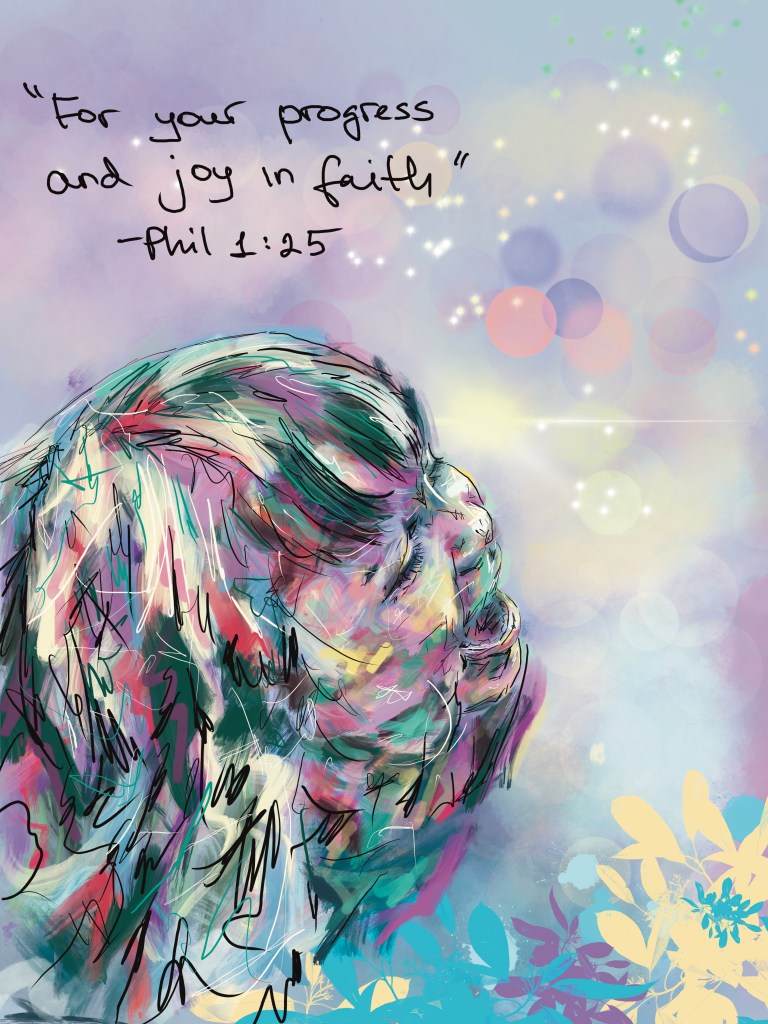
 Irina's Art
Leave a Reply to David DeGrasse Cancel reply