
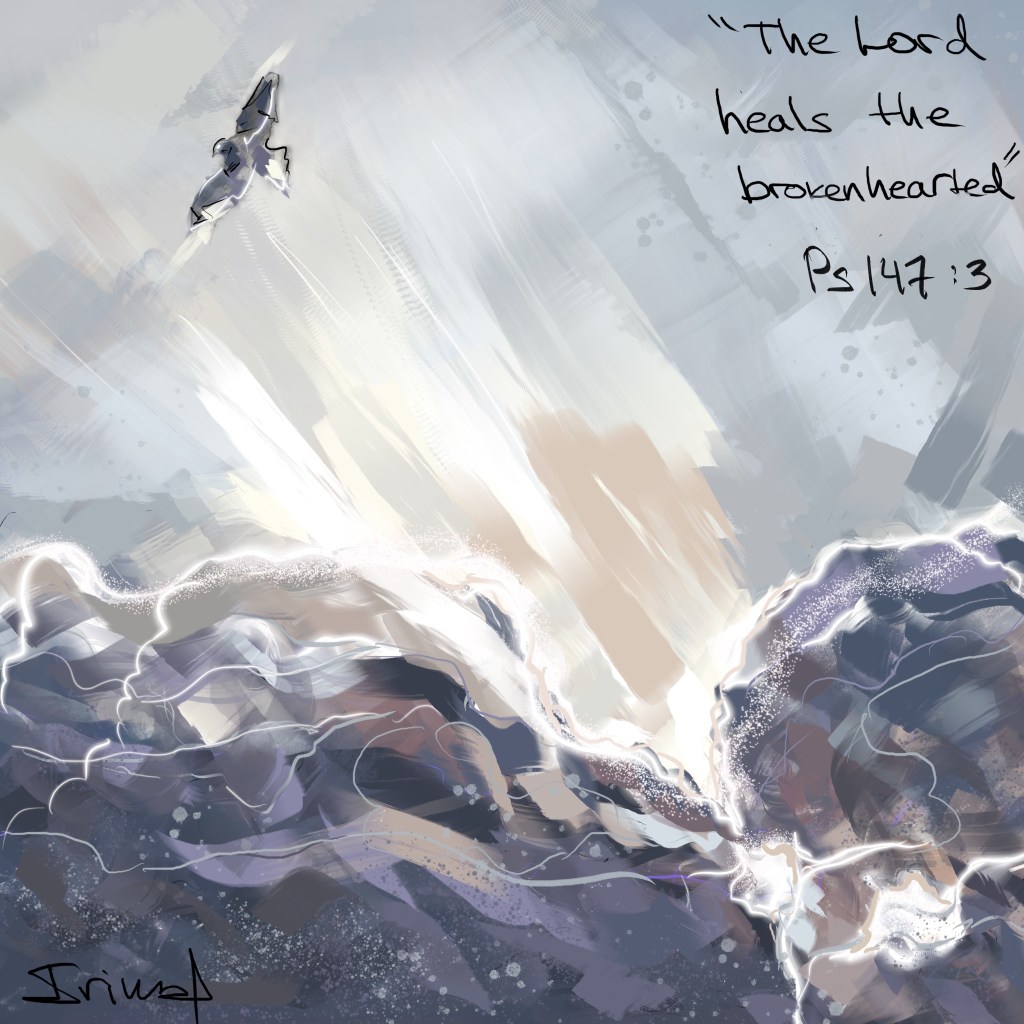
Today, we celebrate the Feast of St. Luke – a man of many talents. Colossians 4:14 names him as Paul’s colleague, “the beloved physician.” The Gospel that bears his name uniquely recounts the birth of Jesus, and its companion text, the Acts of the Apostles, extends the narrative to the birth of the Church. In the Orthodox tradition, Luke is recognized as the first iconographer. While this portrayal may be a fictional composite, it represents our shared potential to heal – if not with stethoscopes and scalpels, then with paintbrushes, quills, or other tools we each choose. (Food, perhaps? The ultimate panacea.)
We emulate physicians by listening deeply, stitching what is torn, or removing what no longer serves. Like artists, we bring harmony to our relationships, as one does with colours and composition in painting. And of course, we all have stories to tell. But do you know what doctors do first when faced with a new case? They name it. My family includes several physicians, which is one reason why Luke, “the beloved physician,” is dear to me. As a child, I quickly learned that when I presented an ailment to my grandmother, the first thing she would offer was a Latin word – an accurate label, but one that meant little to me. Later, after meeting my husband, I realized that all family doctors behave this way. It can be quite frustrating when a doctor seems more pleased at having identified the right term than in immediately alleviating the discomfort! I’d prefer they treat the problem first and name it later, but of course, that’s not how it works. The ability to heal rests on understanding, and understanding begins with naming. This is what artists and writers do as well: we apply words and images, characters and colours, to identify and express what it is that ails the world. As the Orthodox tradition says, one “writes” an icon: paintings tell stories, stories paint images, and together with doctors, creatives name what is broken, first.
Of course, once doctors move beyond their initial excitement at a diagnosis, they often succeed in treating what they have named. This includes my own family physicians – one of whom, remarkably, is still practicing at the age of 95. Yet, I believe that no doctor or psychotherapist has the true power to heal. Their role is to create the right conditions for the body and mind to mend themselves. Once the treatment is administered, what happens within the body – the process of cells, thoughts, and emotions knitting themselves back into health – is a mystery.
Thus, I see healing as the collaborative work of God and humans. Perhaps this is what Jesus meant when he said, “Your faith has made you well,” even as he actively intervened to restore wholeness. Luke’s Gospel is particularly rich in such stories, portraying Jesus as the embodiment of God’s compassion, rather than as a punitive deity. This is striking, especially in an era when illness was often linked to sin – an assumption that has not entirely disappeared even in our own time. At the same time, the 28 or so healing miracles described in the gospels can be difficult to read when we are struggling to find healing ourselves. It can feel as though God either chooses not to help, or that these miracles are merely fictional. To me, the prevalence of healing stories, compared to the three times fewer miracles involving food or nature, reflects the deep hope of ancient peoples for divine intervention – a hope we still share today.
If you are seeking a theology of healing, the book of Sirach, chapter 38, might offer greater insight. This remarkably balanced text, written in the 2nd century BC, elevates the work of all professionals – doctors, pharmacists, scholars, and craftsmen – as a form of prayer, and affirms that divine intervention and human wisdom are intertwined. Sirach prescribes that we first turn to God, then to the physician, and the physician, too, must pray for success. In other words, God’s grace makes healing possible, but it requires our hands, skills, and compassion to bring it to fruition.
This brings to mind a character named Grace from The Briar Club, a book I read over Thanksgiving weekend. Her name isn’t accidental. As she adopts it for herself, she reflects on how much she needed it in her own past, filled with unimaginable suffering. Having survived, Grace embodies the spirit of healing as the newest resident of a boarding house filled with many broken people – and even the house itself is a sentient character in need of help. Driven by painful memories, Grace feels compelled to “feed and fix” her neighbours. Yet, as the story unfolds, we see that Grace doesn’t actually fix anyone. Instead, she creates an environment where her neighbours begin to heal themselves. She starts by hosting Thursday night dinners, where everyone takes turns cooking, and paints a mural in her tiny room, to which her neighbours gradually add more flowers. Over time, the house becomes a place of beauty and belonging. Each neighbour feels seen – sometimes uncomfortably so – “named” by Grace’s incisive nicknames, and nudged toward life-changing decisions. By the time Grace is forced to leave, her neighbours are capable of carrying on, living much more fulfilled lives than ever before. Doesn’t that sound like what Jesus did?
In the words of the Eucharist prayer we will say today, he “healed the sick,” just as Grace helped a battered woman. He “ate and drank with outcasts and sinners,” as Grace did with her imperfect neighbours – people scarred by segregation, organized crime, oppression of women, the Red Scare, the Lavender Scare, and many other scares, which unfortunately persist in our world today. He “opened the eyes of the blind,” just as Grace revealed deep truths to those around her. And he “proclaimed the good news of God’s kingdom to those in need,” showing them that a freer, fuller, eternal life was within their reach, despite the personal tragedies that surrounded them.
In one conversation, Grace tells a neighbour to “try it” – meaning, try happiness. Today, as we receive the anointing with holy oils, or witness others doing so, let us take a moment to reflect on the hope that comes from knowing we are not alone. Let us “try happiness” by walking with each other, and blending our gifts with the grace of God.
Questions to Consider
How has your understanding of healing evolved over time?
What role have your relationships and self-compassion played in your healing at different stages of your life?
Reflect on a time when you felt truly at peace.
In what ways do you celebrate your progress? Whether in healing, when necessary, or more broadly in refining your sense of purpose, belonging, and acceptance.

 Irina's Art
Leave a Reply to Anonymous Cancel reply