
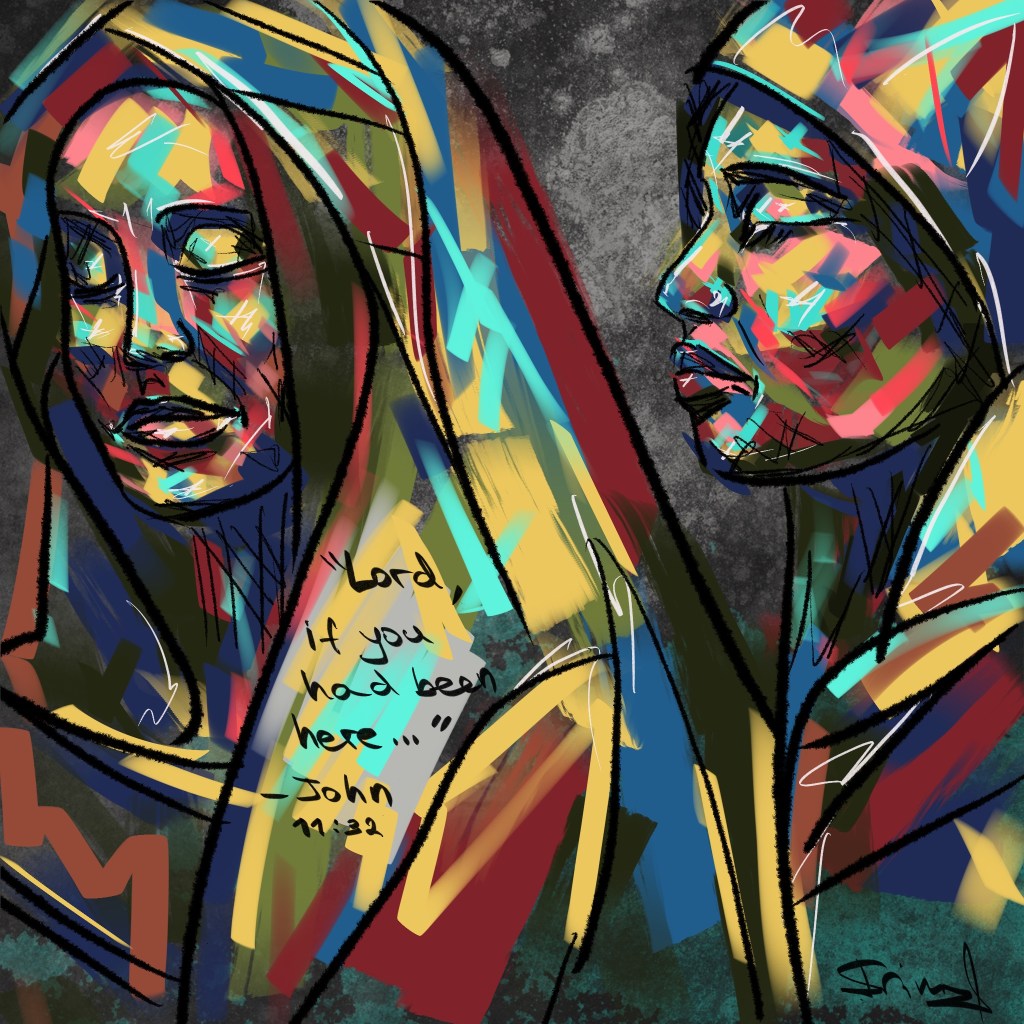
The church calendar’s most meaningful observances are those that allow room for grief while also nurturing hope and belonging. All Saints Day is one such feast, originally commemorating Christian martyrs and later including both historically remarkable figures and our own loved ones. Early Christians observed it on the Sunday after Pentecost, but in medieval Britain, it became syncretized with Samhain, the Celtic festival marking the “thin” time between the fall equinox (now Michaelmas) and winter solstice (now Christmas) – the time when heaven and earth appeared most closest. Notice, too, that All Saints Eve, All Saints Day, and All Souls form a lesser triduum, in symmetry with the great, Paschal one we observe in six months.
As such, this season, though now misinterpreted and commercialized, offers a beautiful time of reflection. My first encounter with Halloween was in 1990s Russia, where Western traditions were just filtering through the broken iron curtain. Thirty years later, the government declared it a criminal activity for its “focus on evil,” counter to Orthodox values. But as a teen, I found it harmless and was even inspired to wonder, “Who are All Hallows?” I’d seen many of their serious faces on Russian icons, but was that the only path to sainthood? Did a saint need to be serious and perform miracles?
Over time, I broadened my view of sainthood and met plenty of real-life saints who perform easy-to-miss feats of faith on a daily basis. Each All Hallows’ Eve, I even feel closer to considering myself a saint: an ordinary mom, priest, artist, athlete, baker, avid reader—and, a saint! So are you. And so are all the names inscribed on every item decorating this church, and in the pages of Scripture and history. Some suffered for their faith; others inspired us to practice it imaginatively and with dedication. Some are still among us, and others have gone before. Together, we form the “great cloud of witnesses” (Heb 12:1) – we might consider it the family album of the Church.
Looking at family photographs and hearing their stories are essential to maintaining connection. As a child, I spent many happy hours with sepia photos dating as far back as the 1800s, and the family lore they inspired. This focus on others reminds us that we aren’t alone in having loved, lost, and tried our best. So what, in a sense, “glues” this family album together? It’s the image of God—the universal capacity for love and empathy, most fully embodied by Jesus.
For example, in the story of Lazarus, Jesus faces grief in a very human way. He didn’t recoil from the unclean—from questionable lives, illness, and death—and he showed deep empathy. He was “greatly disturbed in spirit and deeply moved” (Jn 11:33) and even wept. Lazarus’ sisters said, “if you’d been there” (11:32). Well, at the end of the story, he was there for them, and we can all learn to be there for each other — not raising the dead, literally, but applying the power of empathy to revive one another’s inner life. In today’s world, many feel isolated and somewhat “dead”, despite “the great clouds” formed by families, workplaces, and churches where people surround us, but none seems to really know us. Loneliness can entomb us, and it is most often invisible, until someone takes the time to listen and understand.
How might we help each other “see the glory of God” (Jn 11:40)? First, by recognizing that while we share the human experience, each person’s inner world is uniquely rich and complex. And empathy, while felt, is something we do. It’s not enough to be moved inwardly; to help “unbind” others, we need to validate and support them. But empathy varies. Sometimes we’re so overwhelmed by another’s pain that we’re unable to help (i.e. emotional empathy). At other times, we stay in our heads (i.e. cognitive empathy), which can lead to unhelpful statements such as, “Everything happens for a reason” and “The same thing happened to me”. The most valuable form is compassionate empathy: truly reflecting the other’s emotions without being consumed by them. Practicing this in daily, less consequential conversations can strengthen our ability to be fully present with others when truly difficult situations arise. Consider trying some “rules of threes” in your next dialogue: aim for a 3:1 ratio of questions to statements, support each assertion with only up to three reasons (“I think X because of 1, 2, 3”), and pause for three beats before responding, allowing space for more. These strategies are known to foster meaning, belonging, and a sense of being seen and understood.
Has someone recently made you feel included, validated, valued through such conversations? Let’s treasure such memories as a mental photo album, ready to open in hard times, and learn to be there for each other in such, seemingly small, ways. Church feasts and “thin” places rekindle our hope of belonging in God’s eternal community, but our connection starts in the here and now, and enables us to foster new life in each other.
Quotes to Consider
The following quotes may serve as a springboard for deeper reflection. Additionally, consider exploring the life stories of these three women authors/editors—each marked by achievements and missteps, choices and perspectives that may differ from our own, yet offering inspiration as part of that “great cloud of witnesses” (Heb 12:1) to which we all belong.
“A saint is someone the sun shines through… and when that happens, the stones come to life.” – author unknown, found in “One Hundred Wisdom Stories from Around the World”, compiled by Margaret Silf (1945 – ).
“People are like stained-glass windows. They sparkle and shine when the sun is out, but when the darkness sets in, their true beauty is revealed only if there is a light from within.” – Elisabeth Kubler-Ross (1926-2004)
“A good stained-glass window is made up of thousands of tiny pieces of colored glass held together with lead. The result is a figure. The portrait of a saint is only a fragment of a great and still uncompleted mosaic—the portrait of Jesus. Each saint is like a piece of colored glass in a total picture depicting Christ. The Church, the communion of saints, is the body of Christ. The lead holding the saints together is the Holy Spirit.” – “Saints for Now”, edited by Clare Booth Luce (1903-1987)

 Irina's Art
Leave a Reply